

Same hose, same failure, different Wednesday
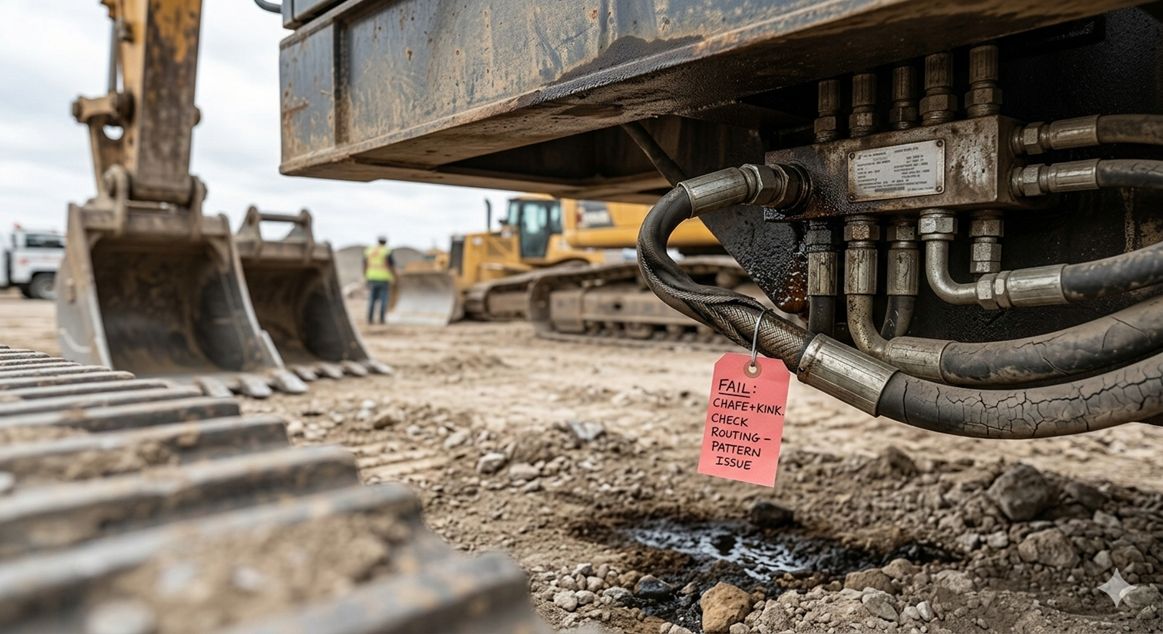
You've already replaced it once. Maybe twice. Same location, same failure, different Wednesday. At some point the hose isn't the problem anymore the pattern is.
Six failure modes. Each one with a different tell. Here's how to read them.
LEAKING AT THE FITTING
Don't re-tighten it. Check whether the hose was fully seated before crimping, whether the fitting is actually compatible with that hose construction, and whether the threads survived the last installation. Re-tightening a damaged thread just reschedules the leak. If the crimp is suspect, replace the assembly.
COVER WORN THROUGH IN ONE SPOT
Something is making contact a frame edge, another hose, a surface it rubs against under vibration. Reroute it or add an abrasion sleeve. If you're buying the same hose for the same wear pattern, the hose isn't the problem. The path is.
HOSE GONE STIFF OR CRACKING
It's done. Equipment that runs hot and sits cold overnight ages rubber faster than the spec sheet accounts for. Replace it before it fails in operation, and spec the replacement for the actual temperature range not the average.
A BUBBLE ON THE HOSE BODY, NOT AT THE FITTING
The system runs fine most of the time, then something spikes — and that spike is separating the inner tube. Could also be the fluid itself attacking it from the inside. Either way, pull it now and don't put the same spec back on until you've checked fluid compatibility and confirmed the pressure rating covers what actually happens in that system, not just what's supposed to happen.
KINKED OR TWISTED
If the hose is fighting its own routing, an elbow fitting or swivel end solves it cleaner than forcing a bend it can't handle. Minimum bend radius isn't a suggestion.
SAME HOSE, SAME FAILURE, SAME SPOT
An identical replacement under identical conditions buys time, it doesn't fix anything. Something in the system is wrong pressure rating, temperature spec, fluid compatibility, or an installation habit nobody's questioned yet. That's the thing worth finding.
A hose past its service interval can look fine right until it doesn't. Quick visual before high-demand work cover damage, fitting seepage, routing contact points catches most of this before it becomes a shutdown.
When the same hose keeps failing, call ARG before you order another one. We spec hydraulic hose assemblies for actual operating conditions, and we'd rather help you stop the pattern than sell you another replacement.