

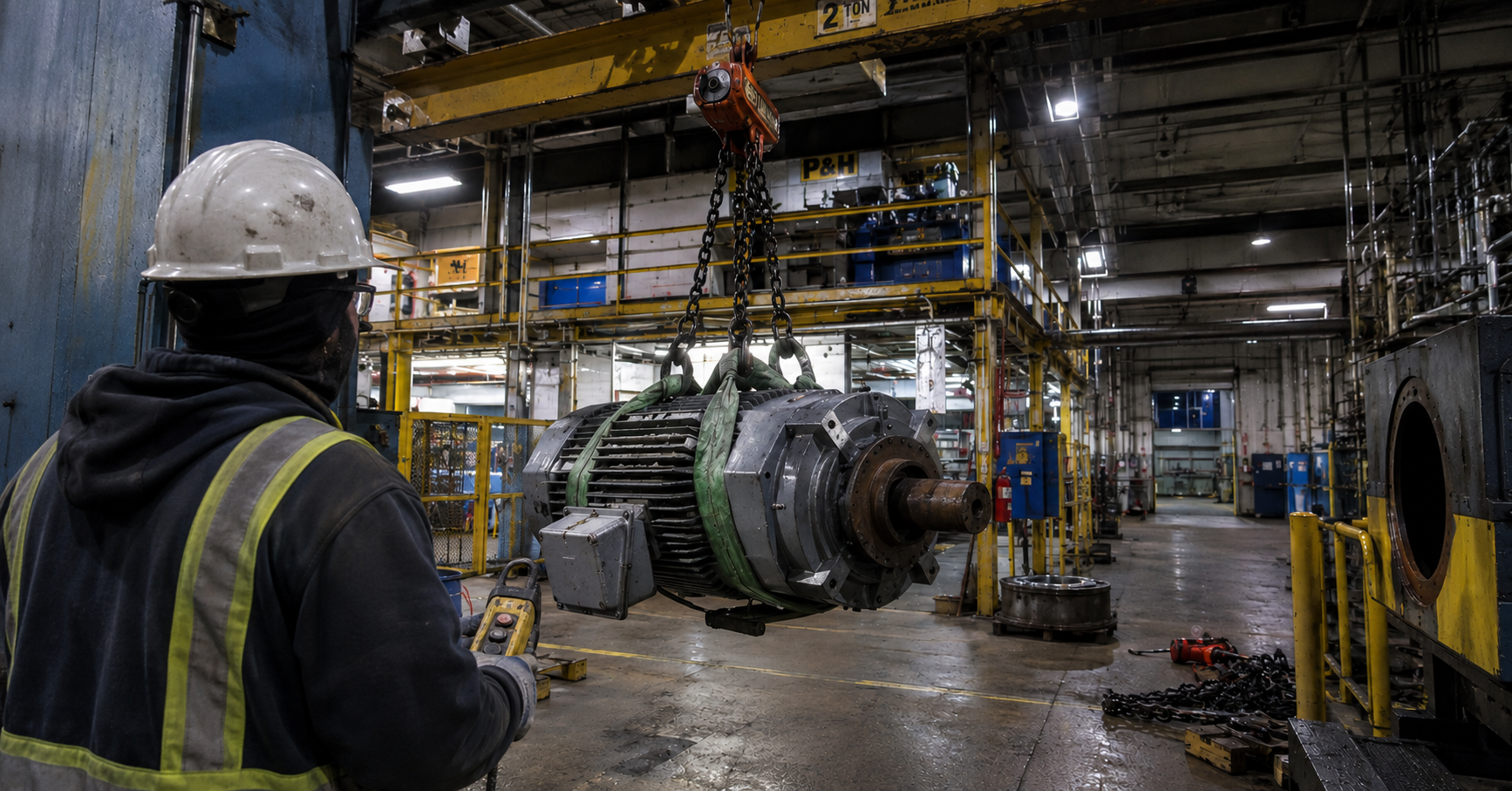
The drive motor needed to come out. It happens a few times a year — scheduled maintenance, unexpected failure, equipment swap. The maintenance crew handled it the same way they always do: found the chain hoist in the back, grabbed a sling from the shelf, and got it done. Nothing went wrong. It never does, until it does.
The Gap Isn't Competence
The maintenance crew knows what they're doing. The gap is that "we do this all the time" is not the same as "we have a program." And in manufacturing, those two things look identical right up until an incident, an OSHA inspection, or a near-miss that finally gets written up.
What an Unmanaged Rigging Program Actually Looks Like
Mixed hardware from different manufacturers with different load ratings. Slings that have been in service for years with no documented inspection history. Chain hoists pulled out seasonally with no record of their condition. Nobody assigned to inspect, nobody tracking service life, nobody sure if the sling in the corner was pulled from service or just set aside temporarily.
Most plant maintenance teams can describe exactly this situation. It's not negligence — it's just how it evolved. Rigging was never the main job. It was always the thing that happens between the main jobs.
Plant Maintenance Means More Lifts Than Most People Count
Belts, pulleys, and couplings are classic MRO wear items — and replacing them means moving equipment. A drive assembly that needs to come off a line for a belt swap is a lift. So is the motor that drives it, the pump that sits next to it, and the tank that needs to shift to get to any of them. The maintenance crews doing these jobs every week are rigging, whether they call it that or not. The question is whether they're doing it with the right gear and a documented process.
What Changes When You Manage It
Standardized slings and lifting hardware matched to actual plant loads. Every piece tagged and tracked — service history, inspection dates, and load exposure all in one place. Shop supplies organized alongside the lifting gear — not scattered across three different drawers in the maintenance shop. When equipment needs to move on short notice, the rigging is ready. No scramble, no improvising, no hoping the sling on the shelf since last year is still good.
OSHA and ASME Aren't Optional
OSHA regulations and ASME B30.9 require that rigging equipment be inspected regularly and removed from service when it no longer meets design criteria. For a plant maintenance team doing overhead lifts, the documentation requirement is the same as it is on a construction site. "We've always done it this way" is not a defense when an inspector is looking at a sling with no inspection record and a load capacity tag that's been worn off.
What ARG Helps You Build
ARG doesn't just supply rigging hardware. We help maintenance teams build programs — standardized inventories, asset tracking, and access to certified rigging inspections — so that when equipment needs to move, the lift is controlled, documented, and compliant.
If your maintenance crew is the rigging crew, that's fine. Let's make sure they have what they need to do it right. Talk to your nearest ARG branch.